Local websites
Theatre was believed to be dead once TV entered the market. It didn’t happen, and we are sure that it never will. And so is our client – a powerful multimedia platform created by theatre-goers for everyone as addicted to dramatic art as the Thespie team is. It is more than important for a business to keep up with the times, especially if we are talking about the entertainment industry. Knowing that for sure, the Thespie team turned to Ester Digital to rebuild and optimize the platform.
Theatre was once thought to be fading with the rise of television. Yet it endured, evolved, and continues to thrive. Our client, Thespie, stands as proof that theatre’s spirit is alive and adaptable. Created by passionate theatre-lovers for fellow enthusiasts, Thespie is a multimedia platform built to connect audiences with the performing arts in the digital age. Recognizing the need to modernize and optimize their growing platform, the Thespie team turned to QFlux for a complete rebuild, UX redesign, and performance overhaul to match the fast-changing landscape of online entertainment.
Founded in 2019 by Tyler Stoops, a theatre aficionado with a strong background in tech and arts marketing, Thespie began as a UK-based ticketing platform for live theatre. Over time, it evolved into a cross-media hub that curates and showcases over 1,000+ digital theatre and arts resources, including performances, clips, podcasts, eBooks, livestreams, exhibits, and concerts. Today, Thespie bridges traditional performance art with digital accessibility, helping audiences stay connected to culture anywhere in the world.
“Arts entertain, inspire and comfort us, which is especially vital in challenging and stressful times.”
The COVID-19 pandemic accelerated a massive shift in the arts. As theatres went dark, artists and companies sought digital ways to share their work — livestreams, digital performances, and hybrid productions flourished. Thespie quickly adapted, transforming from a simple ticketing site into a comprehensive entertainment platform.
However, this rapid expansion brought new challenges: as the volume and variety of content grew, user experience suffered. Navigation became cluttered, load times slowed, and the site struggled to handle large-scale indexing and categorization. QFlux’s task was clear:
To ensure precision and agility, Thespie was supported by a dedicated QFlux development team working exclusively on the project. This close collaboration led to rapid iteration, clear communication, and a deep understanding of Thespie’s goals, bringing theatre’s magic into the digital world.

We began by designing a robust, flexible architecture — the foundation for a scalable and easily indexable platform. This structure supported clean development, fast deployment, and future expansion without disrupting the user experience.
Thespie’s backend was built on the Django framework, chosen for its reliability, administrative flexibility, and REST API integration. This setup streamlined content management, enabling Thespie’s editorial team to manage thousands of media assets efficiently.
To enhance visibility and search rankings, we integrated Prismic Headless CMS for blog management. Its seamless compatibility with React and Next.js provided the best of both worlds — a lightweight, fast-loading blog and reduced development time and cost.
The frontend, built with Next.js, became the backbone of Thespie’s new digital experience. This framework ensured:
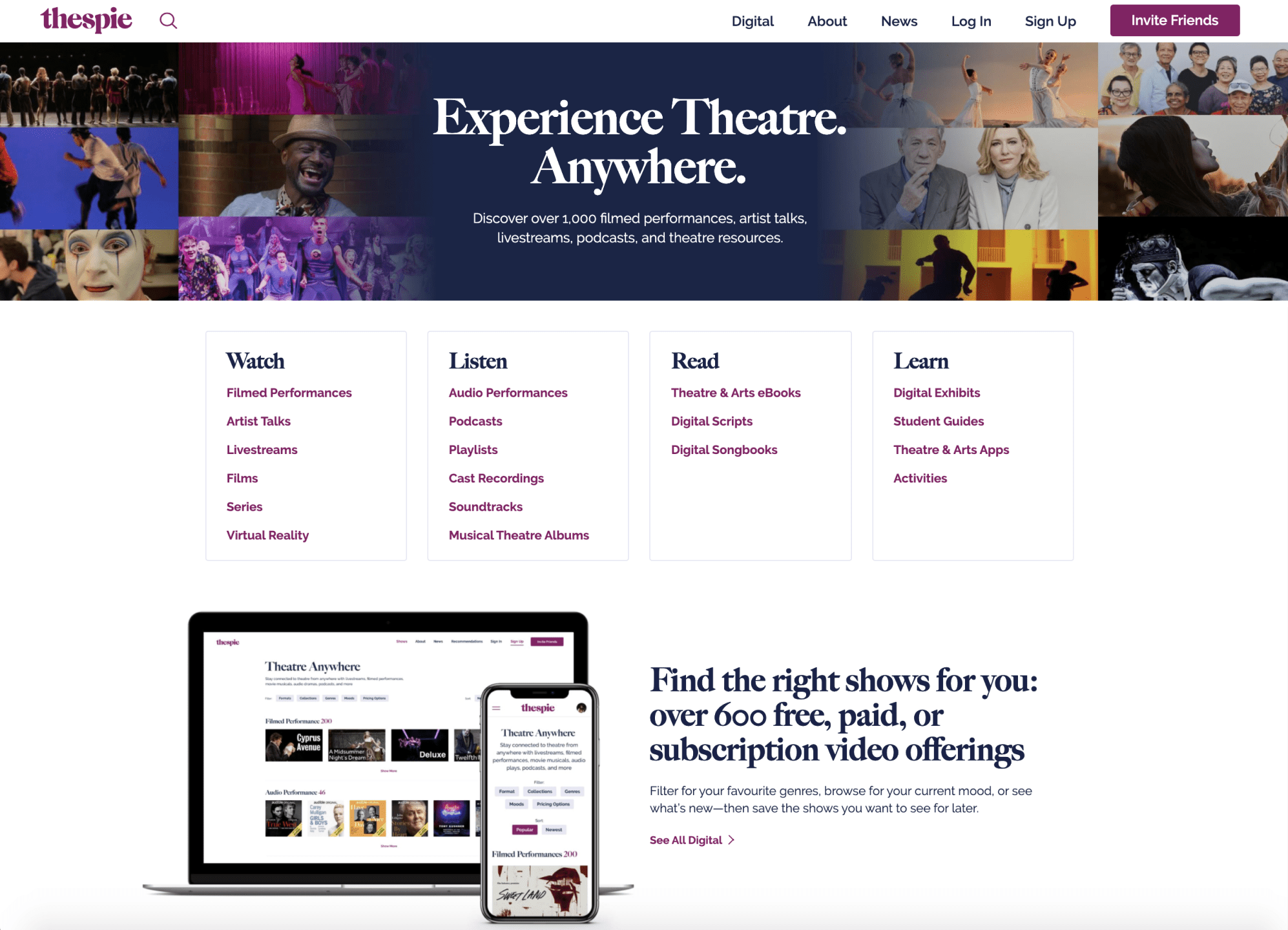
The performing arts often carry an air of exclusivity, but Thespie wanted to break that barrier. QFlux designed a visual identity that feels inviting, artistic, and intuitive — merging the magic of theatre with modern digital clarity.
As the centerpiece of the experience, the homepage was completely restructured. Previously limited to a single Shows section, it now serves as a gateway to diverse content types, including:
We also highlighted The Artist Relief Initiative, a prominent COVID-era effort supporting performers, reinforcing Thespie’s community-first values.
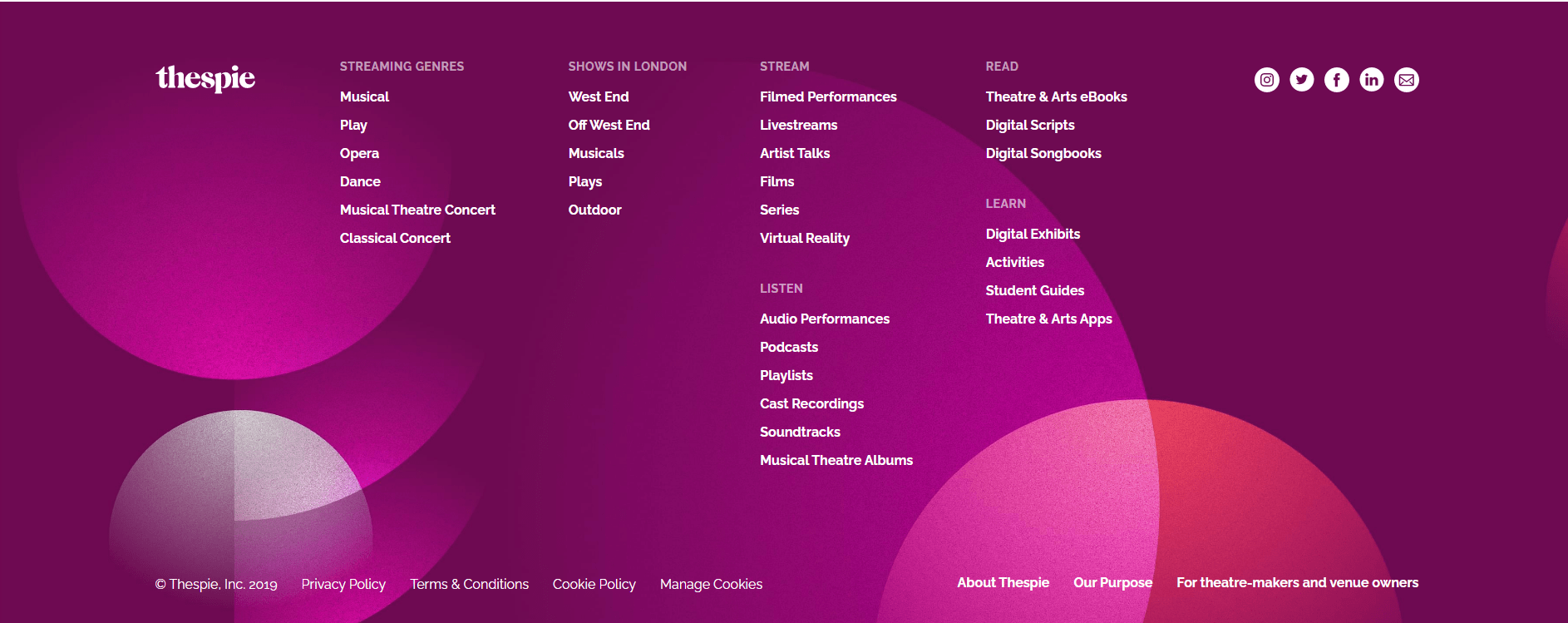
While often overlooked, these sections were reimagined for both functionality and discovery.
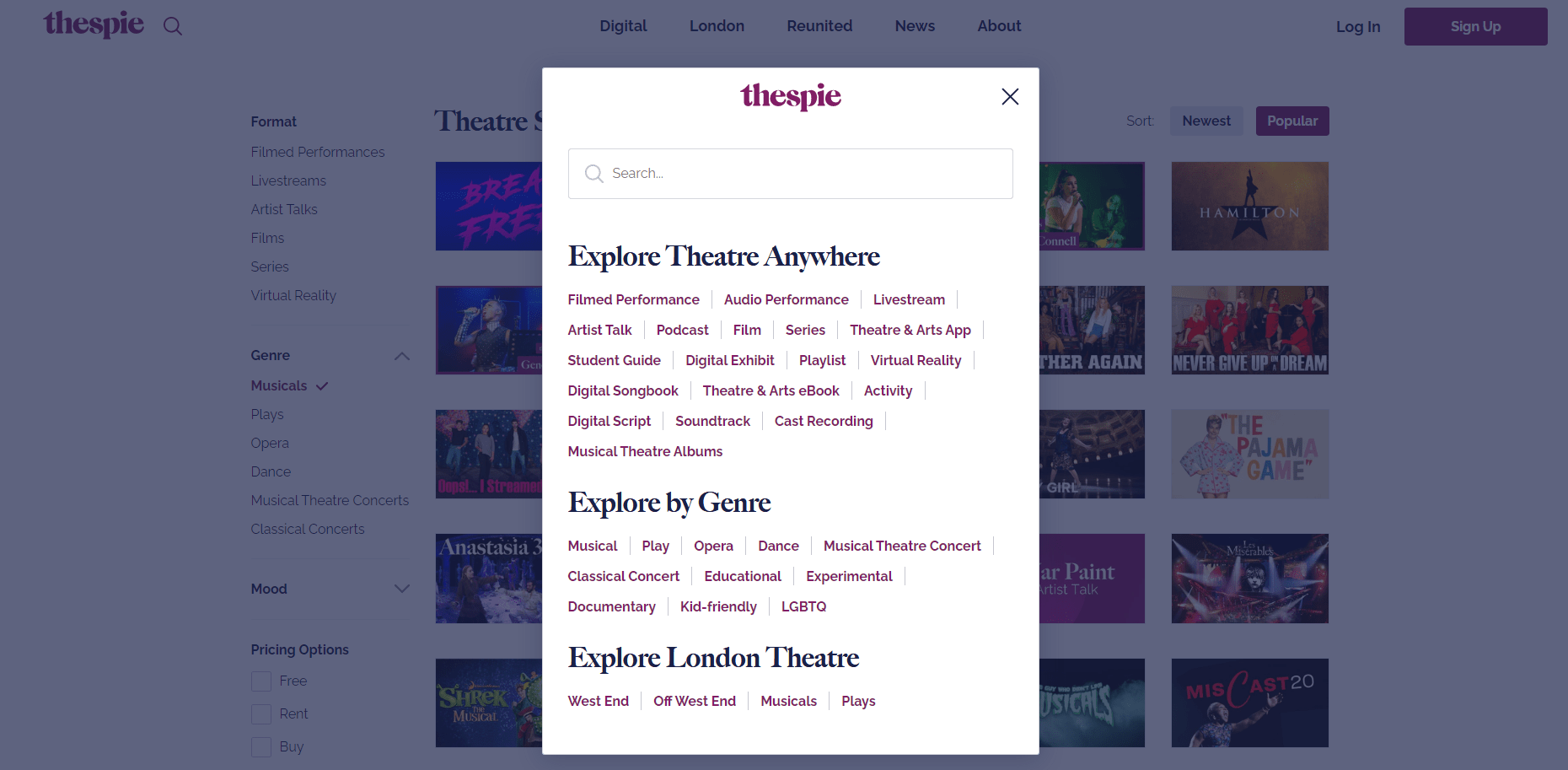
The header now includes a multi-level dropdown menu with featured and popular shows visible right from the menu.
A smart search function allows quick access to specific titles or venues.
The footer consolidates key links — from category navigation to policies — maintaining accessibility without visual clutter.
With hundreds of digital performances, Thespie needed a system that made exploration effortless. We introduced a dynamic filtering system allowing users to refine results by genre, mood, price, or availability. These filters are fully SEO-optimized, with unique URLs generated for each filter combination, ensuring every page can be indexed and promoted.
To improve usability and performance, traditional pagination was replaced with infinite scroll, powered by the react-visibility-sensor library. This modern approach significantly reduced load times and improved Google PageSpeed scores, allowing for smoother exploration without full-page reloads.
We built a real-time search system from scratch. With every keystroke, results update dynamically — even when users recall only fragments (e.g., location or platform). Using the match-sorter library, the search algorithm prioritizes exact matches, partial matches, and keyword relevance, delivering quick, accurate results for every query.
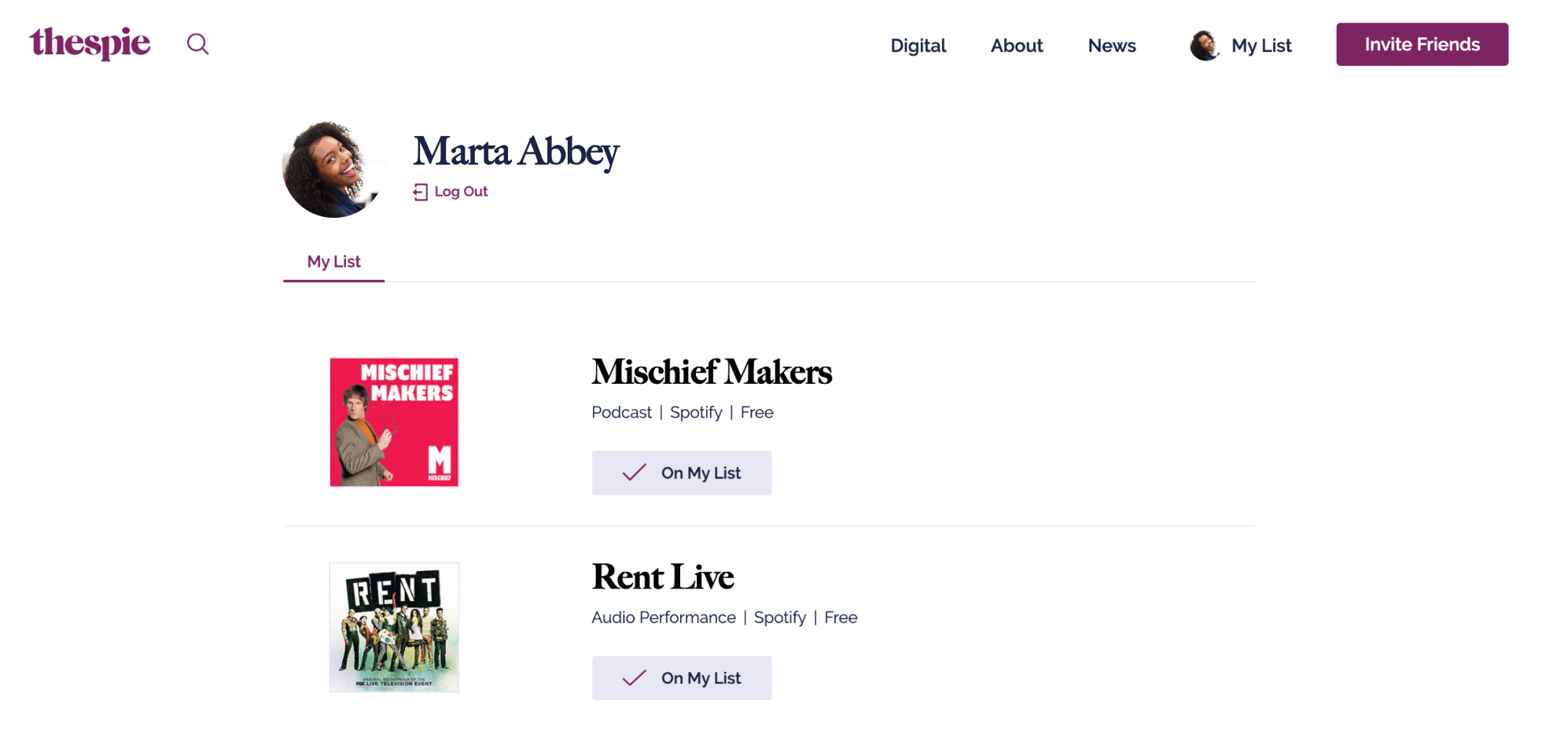
Each show or performance is presented in a modular, information-rich layout, including a summary, streaming source, and related content. Users can create personal accounts, save favorites, and filter their watchlists, turning the browsing experience into an engaging personal journey.
Initially, Thespie loaded all JavaScript components in one large bundle — efficient for smaller sites, but unsustainable as the platform grew. QFlux implemented code splitting and lazy loading, ensuring only necessary components load per page. This reduced memory consumption, improved battery efficiency, and accelerated page rendering.
Using the @next/build-analyzer library, we visualized component sizes to strategically determine which modules to load dynamically, striking the perfect balance between performance and stability.
To simplify long-term maintenance, we applied Atomic Design principles, structuring UI components into:
This modular system made it easy to reuse, update, and scale design components, eliminating redundancy and improving overall development speed.
Through a combination of careful UX restructuring, front-end optimization, and thoughtful design, QFlux helped Thespie evolve into a highly optimized, user-friendly, and scalable multimedia platform.
The redesigned website now:
Most importantly, the new Thespie bridges technology and art, keeping the world of theatre alive, accessible, and inspiring for audiences and creators alike.